

Cherry Hill Rd Over Fleming Creek
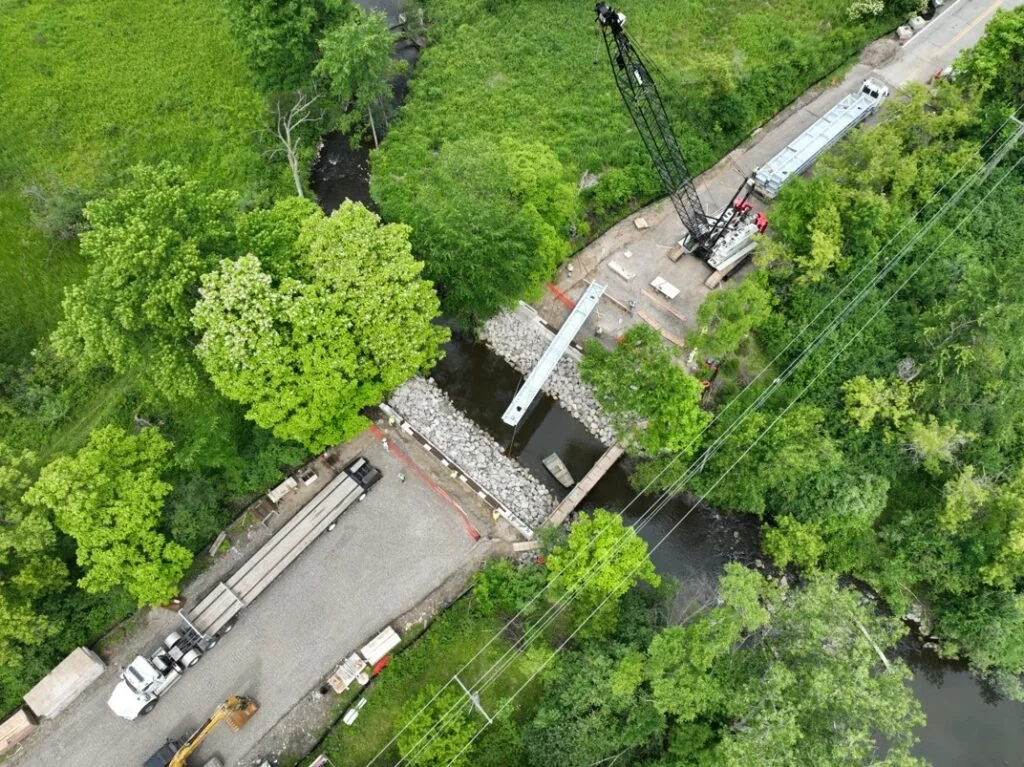
Press Brake Tub Girder installation at Cherry Hill Rd over Fleming Creek, Washtenaw County, MI, June 23, 2026. Picture courtesy of the Washtenaw County Road Commission.
Washtenaw County, MI. Superstructure Replacement. Doubling service life. Slashing lifecycle cost.
Nelson Bridge System’s first complete superstructure installation is saving money and reducing the lifecycle cost of a 46-year-old, two-lane bridge replacement in Washtenaw County. Construction began on Cherry Hill Rd over Fleming Creek in May; the bridge opened to traffic in August. The project was a big milestone for Nelson Bridge and is a perfect example of why Press Brake Tub Girders are an economical choice for short-span bridge replacements.
The existing concrete box beam superstructure was built in 1980 and was in poor condition, according to a 2023 inspection by the National Bridge Inventory. Four years prior, the County Road Commission had placed a weight restriction on the deteriorating bridge because of its condition. In 2024, the bridge was slotted for replacement.
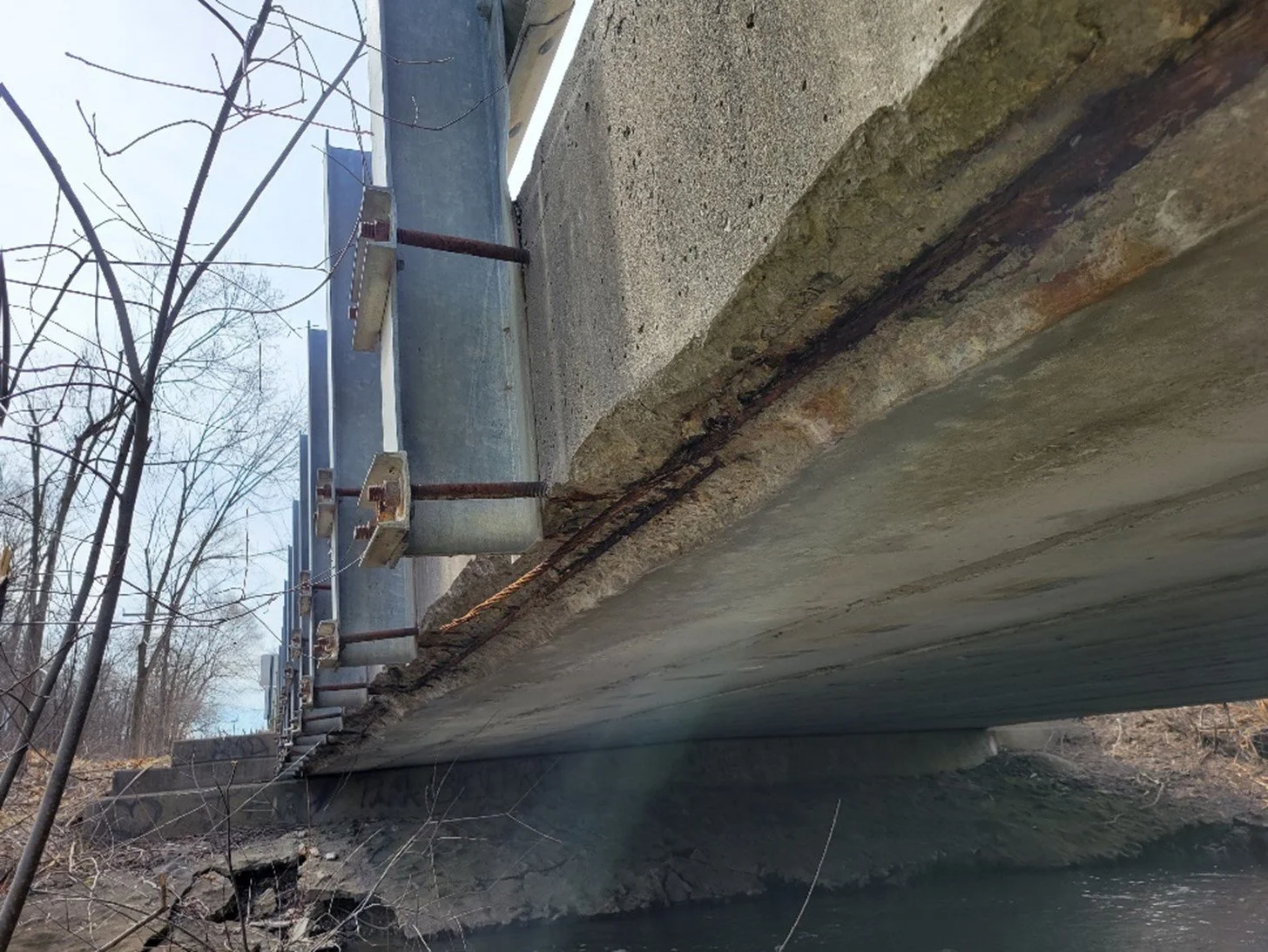
Pictured is Cherry Hill Rd over Fleming Creek, between Gale Rd and Plymouth Rd in Superior Township, 2024. The concrete deck is deteriorating and in poor condition, leading the Washtenaw County Road Commission to green light the bridge replacement.
Picture courtesy of the Washtenaw County Road Commission.
In 2026, the Washtenaw Road Commission awarded CA Hull Construction with the bridge superstructure replacement using Nelson Bridge System’s Press Brake Tub Girders (PBTG). With the reduced deadload of the PBTG superstructure, the exiting foundations were deemed acceptable to carry the increased MDOT HL-93(MOD) live load and hold the existing bottom of beam elevation without raising the approach grade. This decision cut the bridge replacement cost in half and reduced the construction duration to only 3 months.
Additionally, the new press brake tub girders have a service life of 100 years, doubling the time to next replacement and potentially halving the lifecycle cost of the bridge.
Properties of the New Bridge at a Glance:
Bridge: Cherry Hill Rd over Fleming Creek
Overall Length of Bridge: 51’-11”
Width (Out-to-Out Deck Fascia): 38’-5”
Superstructure: 6 - U18 PBTG
Girder Depth: 18”
Deck: SIP Metal Deck and Concrete Deck
Finish: Galvanized Steel
Average Daily Traffic: 3,505 with 8% truck traffic (2025)
Design Load: MDOT HL-93 (MOD)
Lanes on Structure: 2
Construction Start Date: May 11, 2026
Open to Traffic: August 8, 2026
Owner: Washtenaw County Road Commission
Contractor: CA Hull
Manufacturer: Nelson Bridge Systems
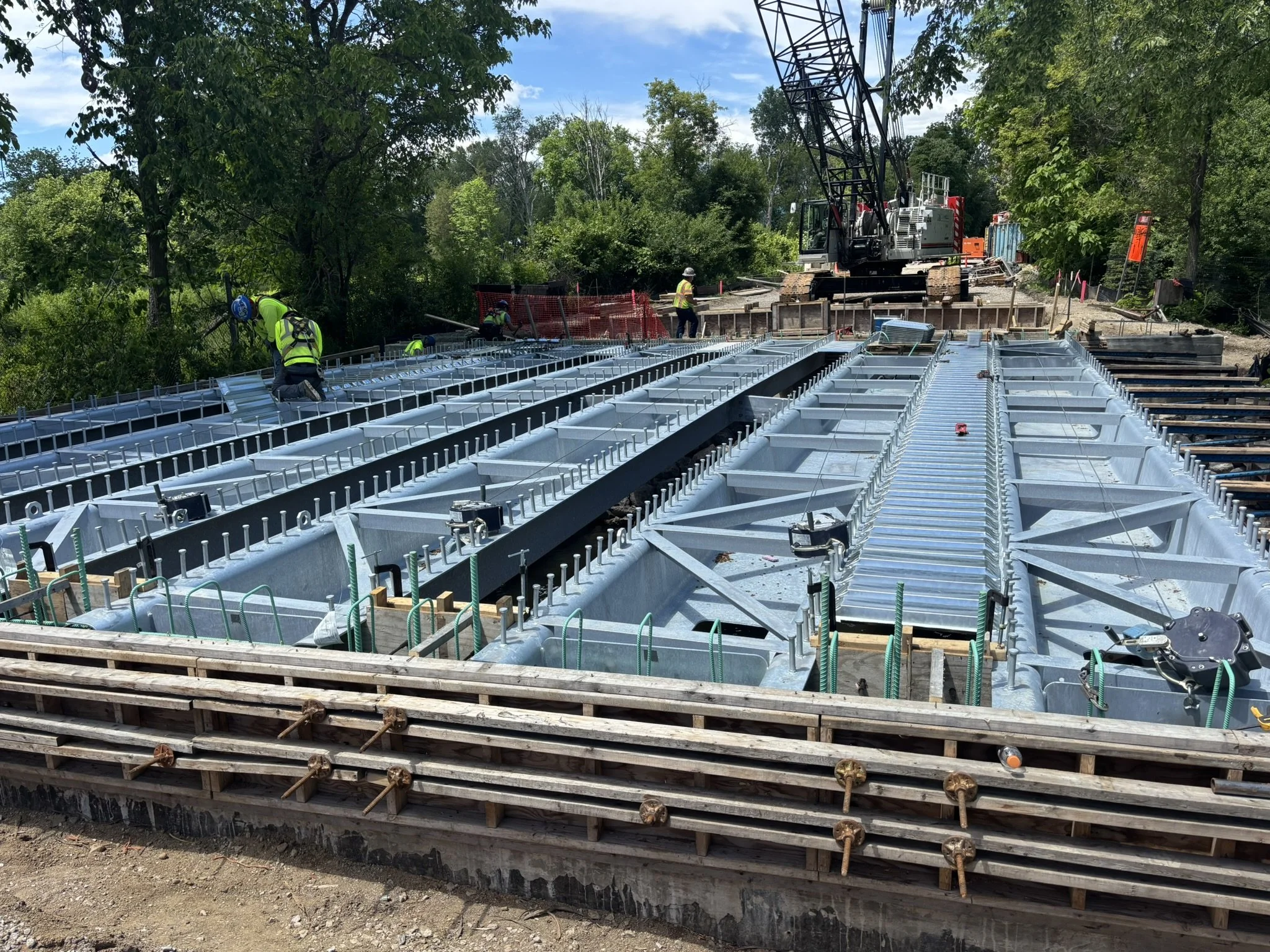
CA Hull Construction workers installing Nelson Bridge System’s Press Brake Tub Girders on Cherry Hill Rd over Fleming Creek, Washtenaw County, MI, June 23, 2026. Picture by Nelson Bridge Systems.
Cherry Hill Rd, Washtenaw County, MI
Washtenaw County, MI is home to the largest university in Michigan – the University of Michigan – as well as Eastern Michigan University, Washtenaw County Community College and Concordia University Ann Arbor. With all those students, professors, family visitors and football fans, Washtenaw County’s roadways ferry millions of travelling individuals into and out of the county each year.
Just in time for the 2026 college football season, Cherry Hill Rd over Fleming Creek, just 4 miles away from U of M North Campus, was opened to traffic without a weight restriction, allowing football fans to travel over Cherry Hill Road unimpeded. As a bonus, the Washtenaw County Road Commission likely won’t have to worry about shutting down the road or restricting traffic due to the integrity of the bridge till the turn of the century.
Press Brake Tub Girder Superstructure
Press Brake Tub Girders (PBTG) were selected to replace the concrete box beam superstructure because of their light weight, long service life, low maintenance requirements and easy installation process.
The PBTG plate is primarily made up of a Made-in-the-USA flat steel plate, cold-formed into a tub girder section. Once the plate has been formed by a press brake, angle braces, end diaphragms and internal diaphragms are welded to the tub girder plate and shear stud are welded to the top flanges. Finally, a 100-year protective coating is applied through the hot-dip galvanizing process.
When a car or truck drives over a PBTG bridge, the load from the truck transfers to the concrete deck, down through the top flanges of the PBTG. That load transfers to the webs through the bends, which then transfer to the bottom flange of the tub girder through the bottom flange bends. No fatigue susceptible welds are used to transfer these loads, simply the plate.
The Short Span Steel Bridge Alliance recently performed fatigue testing of a composite section of PBTG simulating 800 Annual Daily Truck Traffic (ADTT) — 5,333 ADT with 15% truck traffic over a period of 75 years with loading equal to a full AASHTO design fatigue truck. The full-scale test showed no signs of fatigue cracking of the press brake tub girder bend lines after over 2.5 million cycles of loading.
The bottom flange of a PBTG is the high-stress tension region but has no fatigue critical weld details to that require inspection. This lends to an easy inspection for the Washtenaw County Road Commission. Bi-annually, they will do a visual inspection of the PBTG Superstructure to ensure the 100-year service life protective galvanized coating is not deteriorating. An easy-to-access inspection port allows for inspectors to see inside the girders.
The new bridge at Cherry Hill Rd over Fleming Creek made of galvanized steel PBTG beams will last up to 75 years, and likely beyond, with minimal maintenance required under normal traffic circumstances.